I hope very much to see some of you at our next observatory open evening!
Welcome to the Observatory!
This site is intended for anyone interested in astronomy, and particularly anyone who would like to be a member of the Bootham School Astronomy Society. This membership is available to all members of the Bootham community, and students from other York schools who have attended the ISSP course on astronomy at Bootham. If you choose to subscribe by email, you will receive an email of any new post within about twenty four hours. There will also be twitter updates before an observatory session, and you are recommended to follow me on twitter using the button on the right of this screen.
Saturday, 10 March 2012
ISSP session 2
The ISSP finished in high style today, with practical work on the scale of the solar system, impact crater formation and the real size of interstellar distances. I was thrilled to hear students using terms like "you can see the shockwave moving through the impact site" when we were recreating craters, and it was a great pleasure to spend time with so many intelligent, interested young people.
Thursday, 8 March 2012
Thank you for coming!
It was a bit cloudy, but at least it wasn't too cold! We got to see a few things on our target list, including Venus, which showed as a perfect half-moon shape, Jupiter and some fine cloud belts and Mars, with a brilliant white polar cap showing clearly against the orange desert soils of that cold, arid world.
In the photograph below, you can see the Cooke telescope pointing at Venus through the observatory hatch, captured in a one second long exposure.
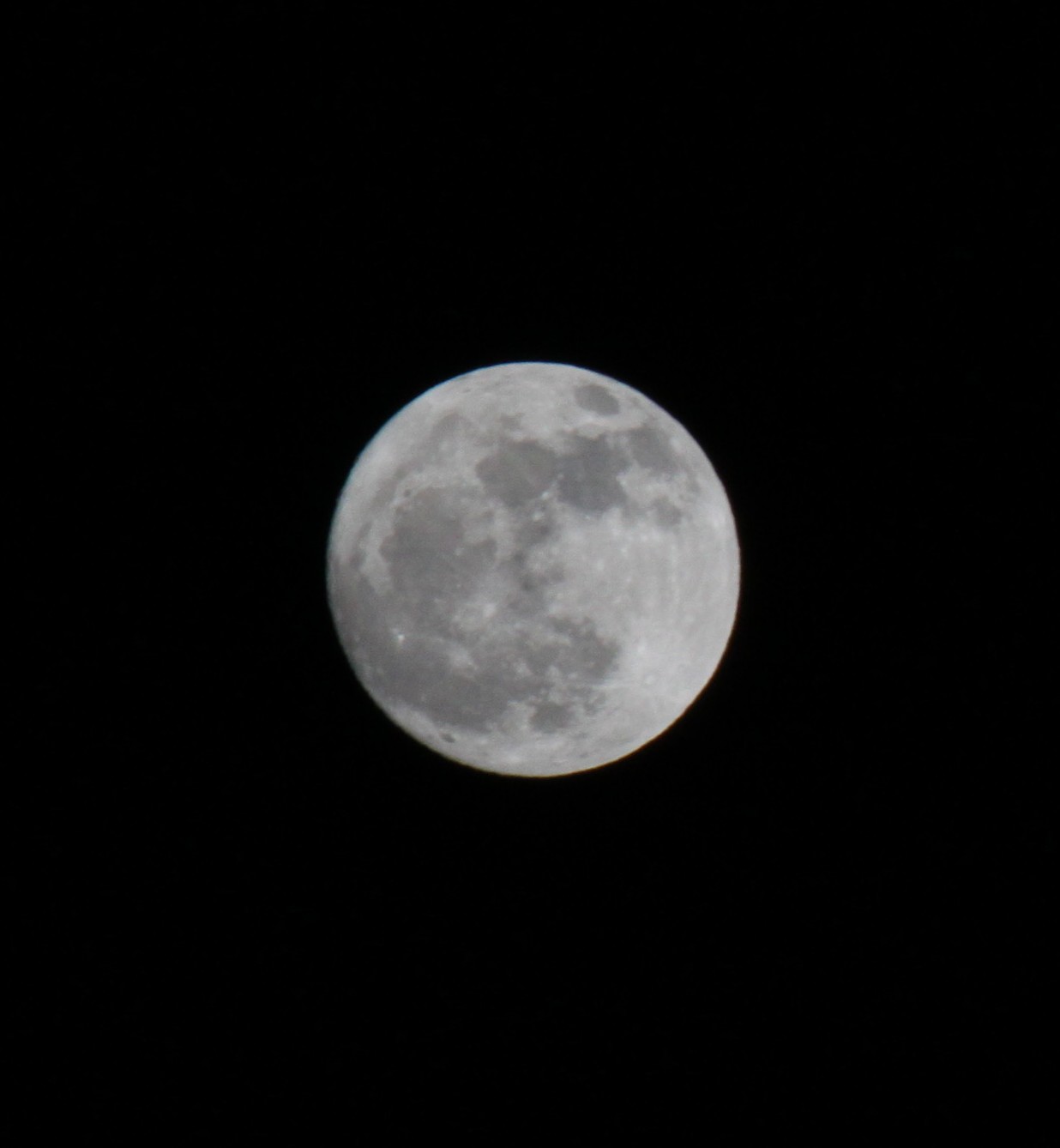
The full Moon put in a showing, with this view as it rose on the eastern horizon.
Full Moon
There is something really magnificent about the sight of the full Moon sailing up into the sky. For thousands of years people have responded to this dramatic spectacular in the arts, with music, paintings, poetry and even architecture relating to the phenomenon.
Here is a lovely picture taken this week by Verena Kummel, showing clearly the ancient (three billion years old) dark seas overlaid with more recent impact craters.
Can you name the seas? In this picture you can find; The Mare Crisium, Mare Frigoris, Mare Tranquillitatis, Mare Serenitatis, Mare Fecunditatis, Mare Humorum, Mare Vaporum, Mare Imbium, Oceanus Procellarum, Mare Nubium, and many more!
Here is a lovely picture taken this week by Verena Kummel, showing clearly the ancient (three billion years old) dark seas overlaid with more recent impact craters.
Can you name the seas? In this picture you can find; The Mare Crisium, Mare Frigoris, Mare Tranquillitatis, Mare Serenitatis, Mare Fecunditatis, Mare Humorum, Mare Vaporum, Mare Imbium, Oceanus Procellarum, Mare Nubium, and many more!
Tuesday, 6 March 2012
Observatory session, Thursday 8th March, 7.30 - 8.30pm
If the sky is clear, I will open up the observatory on the date shown. Mars has just reached opposition, tucked under Leo's paws and should be a good object to look for, but the full Moon will make it hard to see much more than the brightest few stars otherwise. For the interested, I'll go through the basics of setting up the portable Meade telescope so that you can hire it if you'd like to, and we'll put it through its paces on setting Jupiter/Venus.
Finally, we can try to catch a glimpse of comet Garradd with binoculars, and have a go at taking a picture of it with the Nikon camera.
mail me if you can make it!
Finally, we can try to catch a glimpse of comet Garradd with binoculars, and have a go at taking a picture of it with the Nikon camera.
mail me if you can make it!
Sunday, 4 March 2012
Eye witness account of last night's meteorite!
Large Meteorite Seen Over Bootham School
Late on the evening of Saturday 3rd March, a meteorite could be seen making its way across the skies of Northern England. We were surprised and fortunate to catch sight of this phenomenon as we returned to the Fox boarding house after an evening activity in the Sports Hall.
It was like seeing a shooting star, but in slow-motion, in full-colour, and so up-close it felt almost within reach. You could say the head of the meteorite was the size of a football, with a blazing tail of orange and white fire. But perhaps it looked more like a Year-7 student, wearing some kind of jet-boots, like the hero in a sci-fi animation, coolly cruising across the night sky.
In any case, standing on the Fox quad, we saw the meteorite rise over one of the Maths classrooms and travel across Fox House, only to dive behind the Language department and disappear from sight. We almost expected a huge explosion upon impact somewhere on the other side of the river Ouse, but the meteorite continued on its way and is said to have been seen as far south as Devon.
A sighting like this is very rare, perhaps once-in-lifetime. It was certainly strange and startling enough to leave us (two almost-adults) feeling boyishly exhilarated afterwards.
Daniel Gustafsson & Luke Highstead, Resident Graduates
Subscribe to:
Posts (Atom)